
Product Specifications
Below are the key product attributes and specifications that provide detailed information about this item:
Product Overview
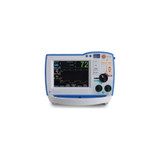
Zoll Medical - 30320003101130012 - R Series ALS Defibrillator with OneStep Pacing, SpO2 & EtCO2
The Zoll Medical R Series ALS Defibrillator is a high-performance resuscitation device designed for advanced life support (ALS) applications. It integrates critical monitoring and therapeutic functions, including defibrillation, pacing, SpO2, and EtCO2, to enhance patient care during emergencies.
Features:
- Real-CPR-Help for ALS: Provides real-time feedback to optimize CPR performance.
- OneStep Pacing System: Simplifies pacing with integrated cable management and ECG leads.
- Code Readiness Testing System: Ensures device readiness for immediate use.
- Rectilinear Biphasic Technology: Delivers efficient defibrillation with lower energy requirements.
- Advisory Defibrillation: Compliant with AHA 2010 Guidelines (2005-compatible).
- Built-in Test Port & Compact Flash Card Slot: Facilitates diagnostics and data storage.
- Integrated AC Power (120 VAC/60 Hz): Ensures continuous operation with standard power sources.
- Optional 5.8 Ah Lithium Ion Battery Pack: Provides extended portable use (sold separately).
- 5-Year Hospital Warranty: Guarantees long-term reliability.
Specifications:
- OneStep Pacing Includes: OneStep Pacing Cable (supports CPR), OneStep Cable Manager, and ECG leads.
- Masimo Pulse Oximetry: Features Signal Extraction Technology, a reusable adult sensor, and a 4 ft extension cable.
- NIBP (Non-Invasive Blood Pressure): Includes a 23-33cm reusable cuff and 3-meter air hose with RMT motion tolerance.
- EtCO2 Monitoring: Uses CAPNOSTAT 5 Mainstream CO2 Sensor (compatible with adult, pediatric, and neonatal patients).
- Compatibility: Suitable for adult, pediatric, and neonatal applications (airway adapter not included).
Use Suggestion:
This defibrillator is ideal for hospital emergency departments, ambulances, and critical care units where rapid response and advanced life support capabilities are essential. Ensure proper training on device operation and regular maintenance checks to maximize performance during emergencies.